
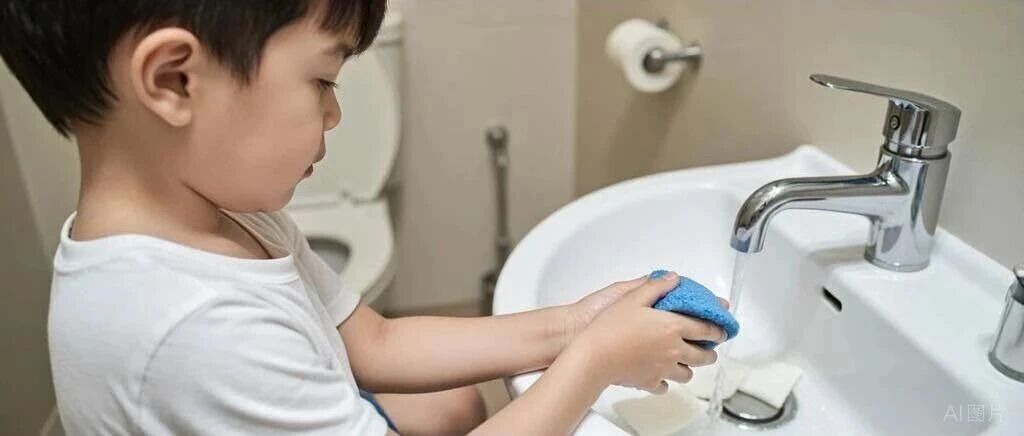
Since my son started kindergarten, our hand-soap consumption has shot up.
Wash the moment you get home. Wash before meals. Wash after the toilet. Wash after touching anything outside... Back then my buying logic was simple: smells nice, the package says "kids' formula," plus the big bold "99.9% germ-killing" on the front — done, this one.
It wasn't until one day, washing his hands, that I noticed the back of his hand was dry with a few fine cracks, and I seriously started reading the ingredients list on that bottle.
A few words looked reassuring at first, but digging deeper, there was stuff worth talking about.
Start with that "99.9% germ-killing."
That claim sounds impressive, but it's the kill rate against specific strains under lab conditions. When you wash hands daily, you're not in a sterile lab — you're standing at a sink rubbing for twenty seconds. More importantly, what the WHO keeps emphasizing: the core of removing germs is the physical process of running water plus rubbing — not relying on chemical germ-killing ingredients.
A regular non-antibacterial soap, washed thoroughly and long enough, performs about the same in real daily use as the "99.9%" antibacterial kind.
But the germ-killing ingredients in antibacterial soaps deserve a closer look.
The most common is triclosan — it appears directly under that name. It does kill germs, but in 2016 the US FDA banned it in hand soaps, citing animal studies suggesting it may disrupt hormones and accelerate bacterial resistance. The human evidence isn't conclusive, but the FDA's conclusion was: its risks outweigh its benefits, and there's no solid evidence it works better than plain soap.
These days, many domestic hand soaps have swapped triclosan for other antibacterials — benzalkonium chloride, benzalkonium bromide, or various "-one"/"-ol" preservative-and-antiseptic agents. There's less research on these than on triclosan, but at recommended concentrations, no clear problems have been identified.
What actually worried me about my son's dry hands was something else: SLS — sodium lauryl sulfate.
This ingredient does the lather — that foam you squeeze out is mostly its doing. The problem is its cleaning power is strong and its skin irritation is relatively high; frequent contact may damage the skin barrier. Kids' skin is thin to begin with, and washing several times a day with a high-SLS product — dry hands, flaking, occasional redness — all of that is possible.
A gentler alternative is SLES — sodium laureth sulfate — less irritating than SLS, and more common in infant and toddler products.
So what should you choose?
My own logic now: for a child's daily handwashing, you don't need an antibacterial formula — a gentle one is enough. Washing properly and long enough is the point, not relying on chemicals in the bottle to back you up.
When reading ingredients, note a few things: if triclosan appears, I personally avoid it; if SLS ranks near the front, that means a high amount — for kids with dry skin, look for an SLES version; fragrance is usually listed as "Fragrance" or "Parfum" — the higher it ranks, the more there is, and kids with allergy history are better off unscented or low-fragrance.
One practical move: search your brand on the National Medical Products Administration's cosmetics registration platform — the full ingredient list is there, fuller than what's printed on the package.
Hand soap isn't about being pricier or having a higher kill-rate — it's about what suits your child's skin.
What are you using at home? Ever noticed anything off with your child's hands after washing?