
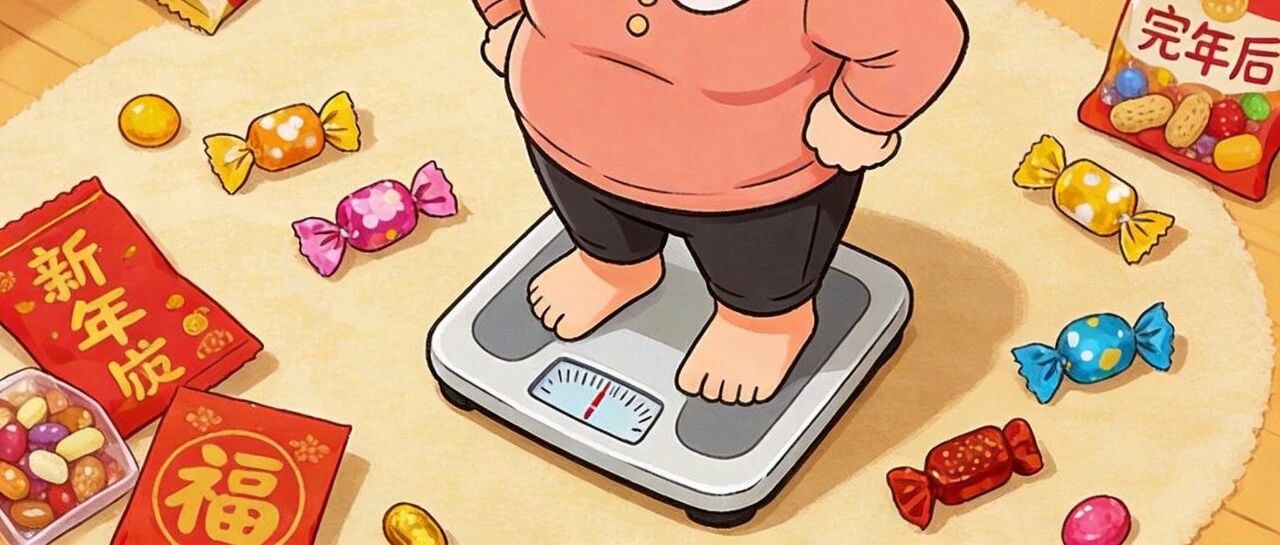
Every Chinese New Year is a cycle. New Year's Eve dinner, more eating on the first day, relatives on the second day, friends on the third... then the scale.
Not that I didn't see it coming. I see it coming every year, and every year I can't control it.
You know how it is with New Year's dinner — seafood is a must, meat is a must, and the look on the elders' faces when they see you eating with gusto — could you really put down your chopsticks?
But the real question is how to recover after the holidays.
Let's start with the most common mistake: crash dieting.
Day one after the holidays, many people jump straight into "atonement mode" — skip breakfast, a bowl of vegetable soup for lunch, half a cucumber for dinner.
Then they last three days, binge on the fourth, and the whole cycle starts over.
I used to be that way — strict, rebound, stricter, rebound harder. Eventually I realized that's not how your body works. When you drastically slash calorie intake, your body doesn't cheerfully say "great, let's burn fat." It panics. It starts hoarding. It makes you hungrier and more likely to crave food.
Dieting isn't impossible — you just can't do it aggressively.
Step one: Let your stomach rest. But don't starve it.
During the holidays, your digestive system is actually more exhausted than you are. After seven straight days of oil, salt, and sugar bombardment, what it needs isn't more work — it's a breather.
The first three days after the holidays don't require aggressive dieting. Just consciously shift towards lighter food. Congee, steamed vegetables, tofu, eggs — these don't feel heavy but aren't low-calorie either. You won't go hungry, and your stomach gets a break.
One detail I really noticed: if I have plain white congee after the holidays, I get hungry really fast — congee spikes blood sugar quickly, then drops it quickly, leaving me thinking about food all morning. Switch to multigrain congee or add an egg, and it's much more stable.
Step two: Bring vegetables back to center stage.
The vegetables on my holiday table... how shall I put this... they existed, but mostly as decoration. Most of the plate was meat.
One thing to do after the holidays: flip the ratio. Vegetables become the main act, meat becomes the side.
You don't have to give up meat. Just don't make every meal feel like a banquet.
My go-to post-holiday meal is simple: a bowl of multigrain rice, a plate of stir-fried seasonal vegetables, and a piece of steamed fish or a fried egg. Looks humble, but after eating it, I swear my body says "thank you."
Step three: Cut snacks and alcohol for a few days. Seriously.
Do you know how many holiday calories come from "non-meal" sources?
Nuts, candy, milk candies, sunflower seeds — you chat and munch and never stop. Plus juice and soda — these liquid calories are the sneakiest because you never feel "full" from drinking them.
For the first week or two after the holidays, just avoid these entirely. Give your body a break.
The time I managed best was through a simple trick: I put all leftover holiday snacks into a cardboard box and stashed it in a cupboard. Out of sight, out of mind. Not throwing it away — just not keeping it within easy reach. Sounds silly, but it works.
Step four: Move, but don't overdo it.
I've seen way too many cases of "revenge exercise" after the holidays — seven days of inactivity, then two hours at the gym on day one. Then they're sore all over, don't want to get up the next day, and find an excuse to quit by day three.
A more effective approach: start with walking. Twenty minutes after each meal. That's enough. Stick with it. It aids digestion and reminds your body that "yes, we do move."
After a week, when you feel ready for more, add some intensity. This pace has way more staying power than sprinting and burning out.
One last thought
Post-holiday dieting really doesn't have to be painful.
You're not punishing yourself for eating too much over New Year's. You're just helping your body adjust the rhythm — switching from "holiday mode" back to "everyday mode."
Keep your mindset relaxed. Don't treat it like atonement. Ate too much? Eat your way back slowly. Gained weight? Move your way back slowly. One meal doesn't define you, and one week doesn't either.
What truly determines your body's state are those unremarkable, everyday habits.
Chinese New Year is just seven days. There are still 358 days ahead.
No rush.