
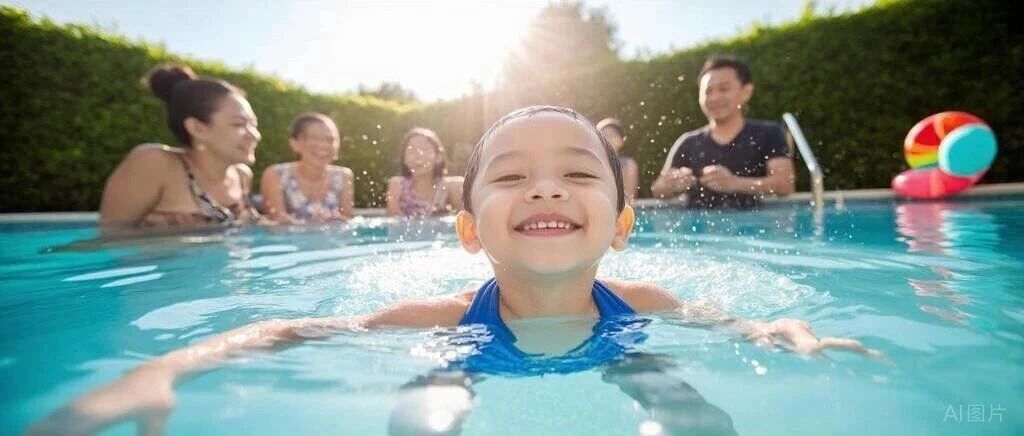
It’s hot in summer vacation, and this is probably the season Little Tiger spends the most time at the pool. The kindergarten already schedules swimming classes, and with summer break keeping him home every day, my partner and I simply started taking him to the pool twice a week.
I’m a regular swimmer myself — I’ve written about why orthopedic doctors always recommend swimming, and about how adults should handle cramps. But when I thought about it carefully, a child soaking in a pool during the dog days of summer faces risks that are genuinely different from an adult’s. So I sorted through them.
First: the pool is most crowded in the dog days, and the cross-infection risk is at its highest.
These 40 days are the most packed period of the year at pools. With more people, water-quality management gets stressed. Children’s skin is thinner to begin with, and soaking for long stretches in crowded water — especially public pools — is exactly when pink eye, fungal skin infections, and athlete’s foot spike. The first thing to do after a swim with the kids is a thorough rinse and dry at home, especially the ears and between the toes where water likes to hide. Don’t be lazy about it.
Second: sunburn happens more easily than you think, and a lot of people underestimate UV in indoor pools.
Outdoor pools go without saying — a child bobbing in the water for an hour or two, and sunburn usually gets discovered only after the fun is over. Indoor pools with good natural light have UV too. For sun protection: apply sunscreen once before getting in; if swimming for more than an hour, reapply midway; and don’t let your guard down after getting out.
Third: the gap between pool water temperature and body temperature in the dog days can easily cause cramps or chills in children.
If a child jumps into slightly cold pool water without a proper warm-up, the muscles get shocked. As I wrote in the cramp article, warm-up before swimming is not just going through the motions — moving the wrists and ankles, stretching the legs, letting the body adjust to the temperature difference significantly lowers the chance of cramps. If a child says his leg suddenly cramped, teach him to take a deep breath and let his body float, then relieve it by stretching in the opposite direction — not by flailing in panic.
Fourth: during the dog days, the pool deck is more dangerous than the water.
Slippery tiles plus a child’s excitement about racing to get in — the chance of falling and bumping at poolside is no lower than the chance of drowning. The pool is crowded this season, and a child running through the crowd is more likely to crash into someone or be knocked over. Telling the child clearly, before every visit, that you don’t run at poolside is a sentence worth repeating.
Fifth: in the dog days, control how long the child swims — longer isn’t better.
The heat makes it easy to miss a child’s fatigue signals. The child is having fun in the water and the parents are glad of the quiet, so two or three hours slip by easily. But swimming drains more energy than you’d think, and with the muggy heat of the dog days, children easily dehydrate or hit low blood sugar. If after getting out you notice the child suddenly listless or off-color, be alert that he may have overdone it — rehydrate, rest, and eat promptly.
Sixth: don’t let a child chug ice water right after swimming.
Same logic as the “chugging ice water causes stomach cramps” piece I wrote before. Coming out of the pool, hot and thirsty, the first thing a child wants is a big bottle of ice water. Get ahead of this habit: have him drink room-temperature water first and give his body a moment to settle.
None of these, frankly, is any complicated big-picture wisdom. They’re all small details that are easy to wave away with the thought “well, the pool has lifeguards.” The dog days’ 40 days are lively at the pool, sure — but lively places are exactly where vigilance slips most easily.